Facial Exercises and Massage
Morning Face Massage for Puffiness: A Beginner's Guide
Try a gentle morning face massage for familiar puffiness, with practical steps, everyday habits, realistic expectations, and swelling warning signs.
6 min read · Educational guide
A short, skin-light morning massage may feel soothing and temporarily soften the appearance of familiar mild puffiness. It cannot remove facial fat, and some morning puffiness settles on its own after you get up. Before massaging, check that the swelling is mild, familiar, painless, and not accompanied by warning signs. Sudden or unexplained swelling needs assessment rather than a cosmetic routine.
Why your face can look fuller after waking

Fluid distribution changes while you lie down, and some people notice mild facial puffiness on waking. Once upright, the appearance may gradually settle. Cleveland Clinic notes that slight morning puffiness resolving within a few hours is often less concerning than swelling that persists or worsens.
Sleep patterns, a salty evening meal, alcohol, allergies, and skin irritation may also be relevant. These are possibilities, not a diagnosis. New medication, dental problems, infection, and medical conditions can produce facial swelling too.
Fat does not appear overnight and disappear before lunch. However, you cannot reliably identify the cause of fullness from a mirror alone. Avoid assuming that every puffy morning is harmless fluid retention, especially if the pattern has changed.
Do a quick safety check first
Skip massage if the skin is painful, infected, hot, red, broken, or significantly irritated. Do not work over an active painful rash or press on tender lumps. Avoid self-massage for unexplained swelling, including swelling that is distinctly one-sided.
After facial surgery, dental surgery, injections, or another procedure, follow the treating professional's advice about when touch is safe. If you have heart or kidney disease, clotting concerns, diagnosed lymphatic disease, or previous lymph-node treatment, ask a clinician before lymphatic-style massage.
You do not have to massage at all. Washing gently, getting upright, and allowing time are reasonable options when puffiness is familiar and mild.
A gentle three-to-four-minute morning routine
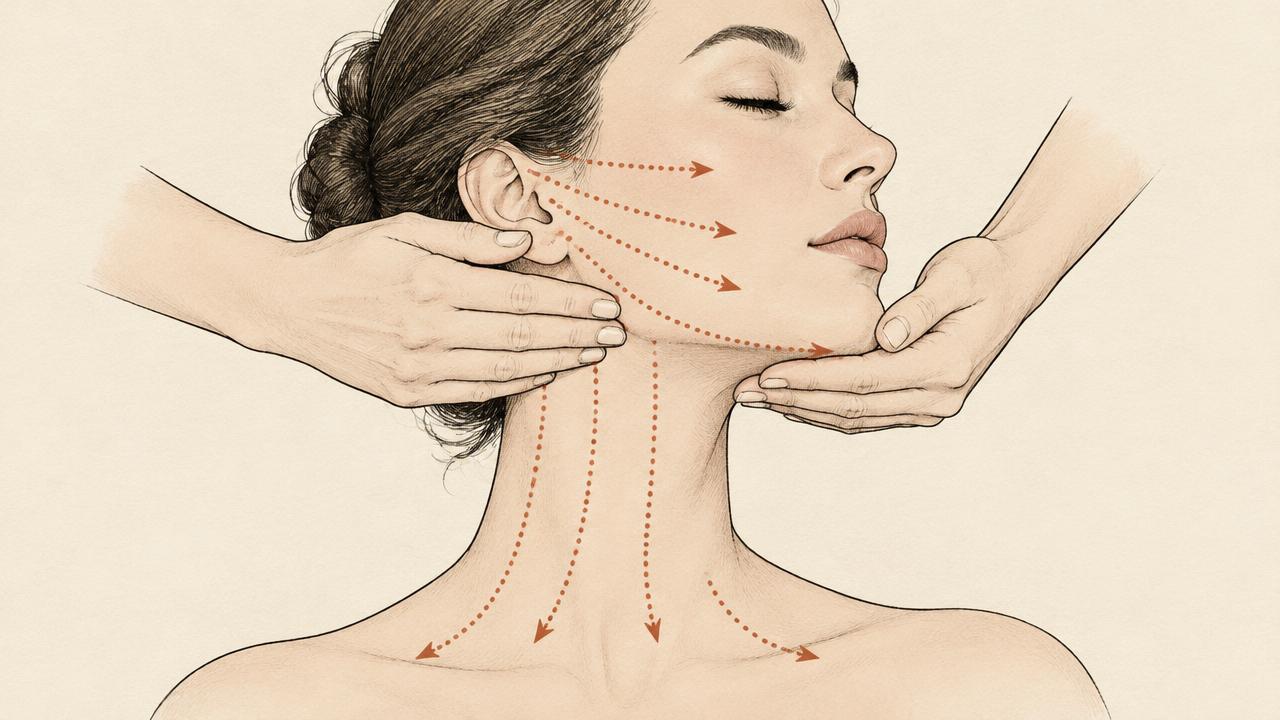
Use broad finger pads and pressure so light that the skin barely shifts. These surface movements are for comfort, not a medical drainage sequence. Stop if your skin reddens noticeably, stings, hurts, or becomes more swollen.
Cleanse and prepare
Wash your hands, then rinse or cleanse your face gently with comfortable cool-to-lukewarm water. Pat rather than scrub. If the skin feels dry, use a small amount of a familiar, well-tolerated moisturizer. Spend about 30 seconds; avoid harsh exfoliation or unfamiliar products.
Relax your neck and shoulders
Sit or stand upright with your head neutral. Let your shoulders lower and your teeth separate. Take three easy breaths over about 20 seconds. You do not need to press the neck or prepare lymph nodes before touching the face.
Begin with easy facial movements
Rest your hands lightly against the sides of your face, then release. Soften your forehead and lips without forceful smiling or clenching. If comfortable, make two light outward passes across the forehead above the brows. Stay away from the eyes and eyelids.
Massage the cheeks lightly
Place finger pads beside the nose, below the eye area. Move outward over the cheeks toward the sides of the face with almost no pressure. Lift and reset after each pass. Repeat three times per side over about 45 seconds. Do not pull the lower eyelids, squeeze the cheeks, or work over sore skin.
Follow the surface of the jawline
With teeth apart, trace lightly from near the chin along the skin over the jawbone toward the ear. Repeat three times on each side, taking about 45 seconds. Do not hook fingers beneath the jaw, press into the jaw joint, or rub the front of the throat.
Finish without stretching the skin
Lift your hands away and let your face rest. Take a comfortable breath and continue your usual skincare without additional rubbing. There is no need to squeeze, scrape, repeat until visibly slimmer, or massage the neck deeply.
Expect comfort, not a guaranteed transformation
Gentle facial self-massage may temporarily affect the appearance of puffiness and can be relaxing. However, evidence does not establish a predictable effect for every healthy person. Natural settling after waking may account for some of what you notice.
Massage does not burn cheek fat, remodel facial bones, or prevent future swelling. A routine that leaves your face red or sore has not worked 'better.' Skin-light contact is the limit, not a warm-up for deeper work.
Begin with an occasional short session. There is no proven need to repeat it daily or extend it when nothing changes. If your skin feels irritated later, stop and let it recover rather than trying another tool.
Habits worth considering beyond massage
Aim for a regular sleep schedule and enough sleep for your needs. If puffiness follows unusually disrupted nights, prioritize the sleep problem rather than compensating with a longer facial routine.
Maintain normal, consistent hydration instead of forcing large amounts of water. If you have a prescribed fluid limit, follow it. Drinking extra water does not flush facial fat away.
Notice whether very salty evening meals or alcohol repeatedly precede puffiness. You can moderate excessive intake without restrictive dieting or cutting out whole food groups. A single morning is not enough to prove a trigger.
Consider allergies and irritants if puffiness comes with itching, sneezing, or a reaction after skincare. Avoid suspected irritating products and ask a pharmacist or clinician for appropriate advice. Do not rub itchy eyelids or assume massage will resolve an allergic reaction.
When facial swelling needs medical attention
Seek prompt assessment for new unexplained swelling, swelling that persists or worsens, or swelling with pain, redness, warmth, fever, or dental symptoms. Eye pain, visual changes, or marked swelling around one eye also require urgent advice.
Call emergency services for sudden swelling of the lips, tongue, or throat, breathing or swallowing difficulty, or faintness. These can be signs of a serious reaction. Do not wait to see whether massage works.
If recurring puffiness concerns you, note when it occurs and any associated symptoms for your clinician. Avoid repeatedly photographing yourself or trying to diagnose the cause by facial shape.
Frequently asked questions
Should I massage directly under my eyes?
For this beginner routine, avoid eyelids and the eye area. The skin is delicate, and unexplained eyelid swelling should not be treated by rubbing or pressing.
Is an ice roller necessary?
No. Clean hands are sufficient. Avoid direct ice, extreme cold, and heavy tool pressure; they are unnecessary for this routine and may irritate skin.
What if my face looks unchanged afterward?
That is a normal possible outcome. Do not increase pressure or repeat the routine aggressively. Massage is optional and has no guaranteed depuffing effect.
The takeaway
For familiar mild morning puffiness, a few minutes of gentle touch may be pleasant, but time and ordinary daily habits matter too. Keep pressure skin-light and treat new or concerning swelling as a health question.
Sources and further reading
- Cleveland Clinic: Facial Swelling
- Cleveland Clinic: Lymphatic Drainage Self-Massage
- Cleveland Clinic: Angioedema
General wellness information, not a diagnosis or individual medical advice. A healthcare professional can advise on unexplained swelling, pain, medical conditions, or recovery after treatment.