Facial Puffiness and Lifestyle
How Hydration and Sodium Intake Affect Facial Puffiness
Learn how sodium and hydration influence fluid balance, compare food labels, and build sensible drinking habits without excessive water or restrictive rules.
5 min read · Educational guide
Sodium and water work together in normal fluid balance, so a high-sodium meal may contribute to temporary water retention in some people. However, facial puffiness has many possible causes, and drinking extra water is not a guaranteed cure. A practical approach is to moderate excessive sodium, drink according to individual needs and follow any medical fluid restrictions. Neither strategy selectively removes facial fat.
What sodium does in the body
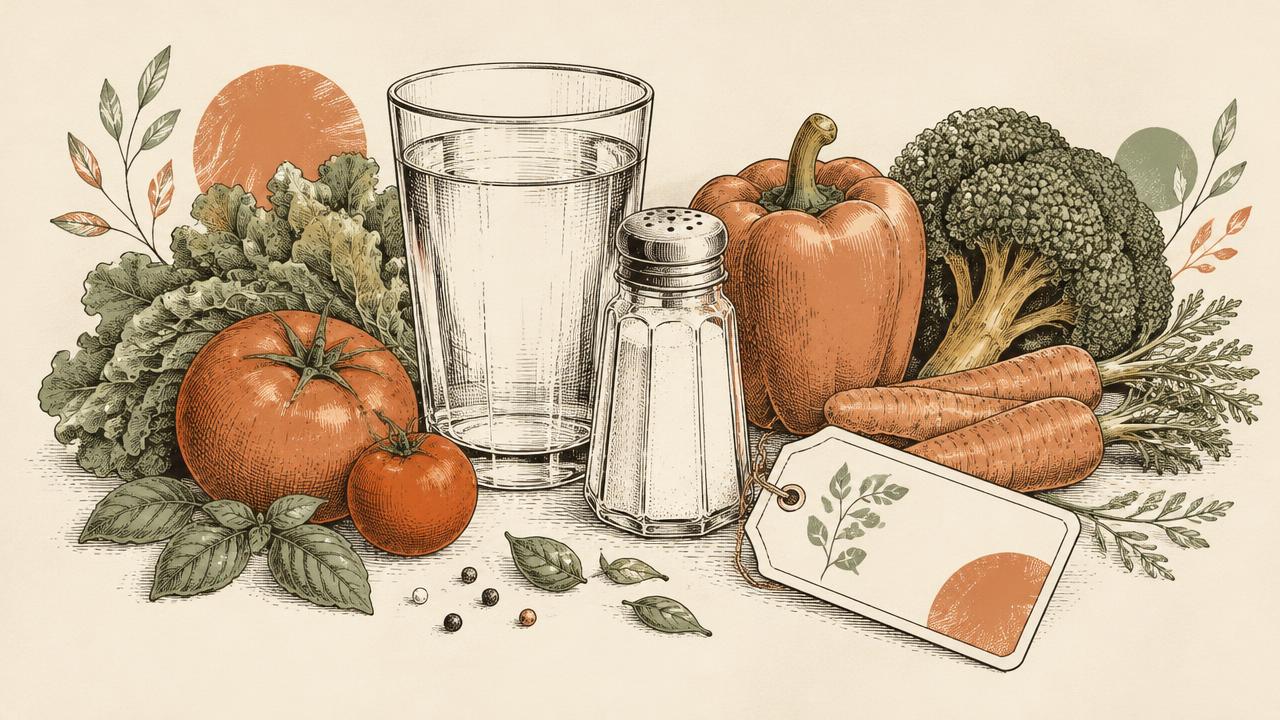
Sodium is an electrolyte involved in fluid balance, nerve signalling and muscle function. Table salt contains sodium, but sodium also appears in many other ingredients and packaged foods. Your body needs some sodium; the goal is not to eliminate it.
The kidneys help regulate sodium and water. A higher sodium intake can change how much water the body retains while balance is restored. Some people notice temporary fullness after a salty meal, while others notice little change. This physiology does not prove that sodium caused a particular swollen face.
Reducing excessive sodium matters for cardiovascular health, independently of appearance. CDC explains that sodium is widely used in processed and restaurant foods, including foods that may not taste especially salty. Checking products is more informative than focusing only on the salt shaker.
Why dehydration and swelling are not opposites
Dehydration means that the body does not have enough fluid for its needs. Swelling means fluid has accumulated in tissues. These describe different processes; the presence of swelling does not tell you how much you should drink or whether your circulating fluid volume is adequate.
Certain illnesses can involve swelling while also requiring carefully managed fluid intake. That is why generic instructions to drink more can be inappropriate, especially with kidney, heart or liver conditions. A clinician's advice overrides cosmetic hydration tips.
Likewise, a puffy face is not a reliable dehydration test. Do not respond by rapidly drinking large amounts or withholding fluids. Excessive water can disturb electrolyte balance, and deliberate dehydration can be harmful.
Practical Ways to Manage Sodium Intake

Look for frequent sources and make manageable changes rather than banning whole food categories. Convenience foods can still be useful, especially when time, money or energy is limited. Compare similar products and choose alternatives that fit your circumstances.
| Common source | Practical alternative |
|---|---|
| Processed meats such as bacon, ham and salami | Use unseasoned cooked chicken, eggs, tofu or lower-sodium beans for some meals. |
| Salted packaged snacks | Try unsalted nuts, fruit or plain popcorn, according to preference and dietary needs. |
| Instant noodles | Use less seasoning powder and add vegetables and a protein source. |
| Fast food | Compare available nutrition information and request salty sauces separately where practical. |
| Soy sauce, bottled dressings and condiments | Compare lower-sodium versions and use herbs, lemon or vinegar for additional flavour. |
| Packaged convenience meals | Compare sodium for the portion you eat and add plain vegetables or grains if useful. |
Read labels for the amount you actually eat
Start with serving size and servings per container. If a meal contains two servings and you eat the whole pack, you consume twice the listed per-serving sodium. The labelled serving is not necessarily a recommended portion. CDC highlights this distinction in its Nutrition Facts guidance.
Compare sodium in milligrams for equivalent portions. For example, a hypothetical soup with 600 mg per serving provides 1,200 mg if you eat two servings. A similar soup with 350 mg per serving would provide 700 mg for the same number of servings. The comparison is useful without needing to label either meal morally good or bad.
Labels vary by country: some list salt rather than sodium, often per 100 g as well as per serving. Compare like with like. Do not start potassium-based salt substitutes without advice if you have kidney disease or take medicines that affect potassium.
Hydration Habits
Keep drinks accessible and drink regularly across the day. Needs change with activity, heat, illness, pregnancy, breastfeeding and individual health. Water is a useful choice, but other drinks and water-containing foods also contribute. NHS guidance treats general intake figures as guides rather than universal prescriptions.
Thirst and a generally pale-yellow urine colour can provide everyday clues for many people, but neither replaces medical advice. Medicines, supplements and health conditions can affect these signals. Ask your healthcare team if you are unsure, particularly if you have a prescribed fluid limit.
There is no need to compensate for a salty dinner by forcing water, skipping meals or doing extra cardio. Return to ordinary eating and drinking. If swelling recurs, investigate the cause rather than escalating restriction.
Use the app as a log, not a fluid prescription
The nutrition page page includes water and cardio logging. Its fixed 10-glass water target is an app setting, not an individualised medical prescription. Do not drink extra solely to complete it. Your needs and any clinician-directed fluid restriction override the displayed target.
Call your local emergency number for sudden lip, mouth, tongue or throat swelling, difficulty breathing or swallowing, or collapse. Seek prompt care for sudden, severe, painful or one-sided swelling, especially with fever, redness or eye symptoms. Arrange assessment for persistent, worsening, recurrent or unexplained swelling; do not assume sodium is responsible.
Frequently asked questions
How much water should I drink to reduce facial puffiness?
There is no universal amount that treats facial puffiness. Drink according to your individual needs and professional advice. The app's fixed 10-glass target is not a medical recommendation, and any prescribed fluid restriction takes priority.
Should I cut out salt completely?
No. Sodium has essential functions, and complete avoidance is neither practical nor the goal. Focus on moderating excessive intake through realistic substitutions. Follow any individual sodium guidance from your clinician or dietitian.
How quickly will a lower-sodium diet change my face?
There is no reliable facial timeline or guaranteed result. Appearance varies for many reasons, and persistent swelling may have nothing to do with sodium. Judge changes by sustainable habits and health needs rather than daily photographs.
The takeaway
Sensible sodium choices and individualised hydration support health, but neither is a guaranteed puffiness cure. Read labels realistically, avoid compensatory drinking and seek assessment for unexplained swelling.
Sources and further reading
- CDC: Sodium's Role in Processed Food
- CDC: Nutrition Facts Label and Your Health
- NHS: Water, drinks and hydration
- MedlinePlus: Facial swelling
General wellness information, not a diagnosis or individual medical advice. A healthcare professional can advise on unexplained swelling, pain, medical conditions, or recovery after treatment.