Facial Exercises and Massage
How to Perform a Facial Lymphatic Drainage Massage
Learn a skin-light facial massage routine, anatomical precautions, realistic limits, and when swelling needs clinical advice rather than self-massage.
6 min read · Educational guide
For home self-care, facial massage described as lymphatic drainage should use skin-light contact, slow movements, and no pain. It may feel relaxing and could temporarily change ordinary puffiness, but it does not remove facial fat. The routine below is a cautious wellness option for otherwise comfortable skin—not medical manual lymphatic drainage or a way to treat unexplained swelling.
What the lymphatic system does
The lymphatic system helps return excess tissue fluid to circulation and supports immune function. Its vessels and nodes work continuously; healthy people do not need to force them open or perform a daily facial 'detox.'
Clinical manual lymphatic drainage is a specialized, gentle technique used in selected situations, including some forms of lymphedema. A trained professional adapts it to a person's condition and medical history. Cleveland Clinic distinguishes this care from general massage and lists important medical precautions.
Ordinary facial massage may involve rubbing or kneading for comfort. Lymphatic-style techniques emphasize much lighter contact. A home facial routine cannot confirm that fluid is obstructed, diagnose the cause of swelling, or reproduce individualized clinical care.
When to avoid self-massage
Do not massage unexplained, sudden, increasing, or one-sided swelling. Avoid infected skin, fever, hot or red areas, painful rashes, open wounds, and areas with significant irritation. Do not press on swollen or tender lumps.
After facial surgery, dental surgery, injections, radiation, or another recent procedure, wait for the treating professional's instructions. Healing tissue and altered lymphatic pathways may need a specific plan rather than a generic online sequence.
Seek clinician guidance before lymphatic-style massage if you have heart failure or another significant heart condition, kidney disease, blood clots or clotting concerns, diagnosed lymphedema, or previous lymph-node removal. Do not use massage to manage swelling from these conditions yourself.
Pressure and anatomy: the essential boundaries

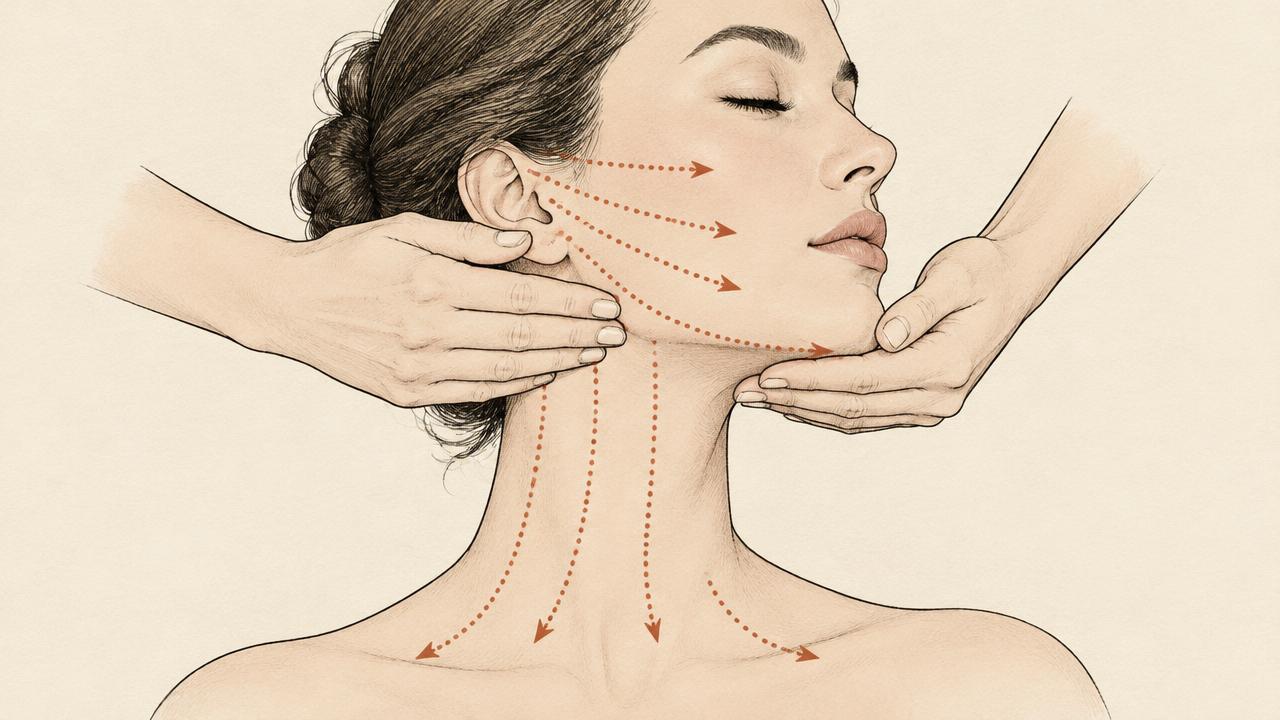
Use broad finger pads with contact so light that the skin barely moves. There should be no digging, kneading, blanching, lingering redness, or discomfort. If the skin drags, reduce contact or lift and reposition; do not compensate with more pressure.
Never press into the front of the throat, under the jaw deeply, or into the neck's pulse points. Avoid deep pressure anywhere on the neck. Keep contact away from the eyes and eyelids, and do not trace the eye sockets.
The directions below are simple surface-movement cues, not a claim that a particular sequence treats disease. There is no need to locate nodes, 'open drains,' or force fluid through a pathway.
A cautious three-to-five-minute routine
Try this only when your face and neck feel normal apart from familiar, mild temporary puffiness. You can omit every neck contact and still use a brief facial relaxation routine.
Prepare clean hands and comfortable skin
Wash your hands and gently cleanse your face. Remove jewelry that might scratch. If needed, apply a little familiar, fragrance-free moisturizer that your skin tolerates. Do not introduce an irritating oil or active skincare product immediately before rubbing.
Relax the neck and shoulders
Sit supported and let your shoulders drop. Take three ordinary breaths with your teeth apart. Keep the head neutral rather than tipping it far back. Spend about 20 seconds settling; no breath-holding or forceful breathing is necessary.
Keep any side-neck contact superficial
If comfortable, rest broad finger pads lightly on the outer side of the neck and make two or three short, feather-light downward surface strokes. Work one side at a time for about 15 seconds. Do not wrap your hands around the neck, seek a pulse, or press inward. Omit this step if unsure.
Trace the jawline lightly
Place finger pads on the skin over the jawbone near the chin. Make three slow, light passes outward toward the ear on each side, lifting between passes. Keep the teeth apart. Stay on the surface rather than hooking beneath the jaw or pressing near the jaw joint.
Use broad cheek movements
Starting beside the nose but below the eye area, move lightly outward across the cheek toward the side of the face. Repeat three times per side over about 45 seconds. Avoid painful acne, irritated patches, and any pulling at the lower eyelid.
Soften the forehead
With relaxed fingertips above the eyebrows, make three light passes from the central forehead toward the temples. Lift and reset rather than stretching the skin. Keep fingers above the brows and away from the eyes. Spend about 30 seconds.
Finish without force
Release your hands, lower your shoulders, and make a small comfortable head turn each way. If desired, repeat one very light outer-side-neck stroke, but do not add pressure. Finish with a quiet breath and leave the skin alone.
How often, and what should you expect?
There is no established cosmetic dose for healthy faces. Begin with an occasional short session rather than repeated passes throughout the day. If your skin remains comfortable, an optional brief session may fit your routine; more is not necessarily better.
You might feel relaxed or notice a temporary difference in puffiness. You might notice nothing. Natural changes after getting upright can occur at the same time, making the massage's contribution difficult to judge.
Cleveland Clinic describes facial self-massage as a light technique, but that does not establish permanent slimming or a benefit for every cause of swelling.
Common mistakes include using tools to increase force, repeatedly working a swollen area, pressing until the skin reddens, and assuming soreness means drainage occurred. Stop immediately for pain, dizziness, skin irritation, or increased swelling.
Do not massage through warning signs
Seek prompt medical assessment for unexplained, persistent, painful, red, hot, or worsening swelling, especially with fever, dental pain, or eye symptoms. Appearance alone cannot identify the cause.
Sudden lip, tongue, or throat swelling, trouble breathing or swallowing, or faintness requires emergency help. Massage is not an appropriate first response.
Frequently asked questions
Should lymphatic massage feel firm?
No. This routine uses skin-light contact only. Skip instructions that call for firm pressure, deep neck work, painful rubbing, or pressing on swollen areas.
Do I need a roller or gua sha tool?
No. Clean hands allow easier pressure control. Tools do not make fat disappear and can encourage excessive force or skin irritation.
Can I use this for diagnosed facial lymphedema?
Not as a substitute for care. Ask your clinician or lymphatic therapist for an individualized plan, particularly after surgery, radiation, or lymph-node treatment.
The takeaway
Keep facial massage optional, superficial, and comfortable. Any temporary cosmetic effect is different from fat loss or treatment, and unexplained swelling deserves assessment rather than stronger massage.
Sources and further reading
- Cleveland Clinic: Lymphatic Drainage Massage
- Cleveland Clinic: Lymphatic Drainage Self-Massage
- Cleveland Clinic: Angioedema
General wellness information, not a diagnosis or individual medical advice. A healthcare professional can advise on unexplained swelling, pain, medical conditions, or recovery after treatment.