Facial Exercises and Massage
Face Yoga for Beginners: Exercises to Try at Home
Learn six gentle face yoga exercises with clear beginner instructions, a short routine, safety tips, and realistic expectations about facial changes.
6 min read · Educational guide
Face yoga involves deliberate facial movements, usually combined with relaxation and posture awareness. Beginners can try a short, comfortable routine, but it is not a proven way to reduce facial fat or sculpt a jawline. Start with small movements, keep your teeth unclenched, and stop if anything hurts. The aim is an optional movement break—not a workout that must leave your face tired.
What face yoga can and cannot offer
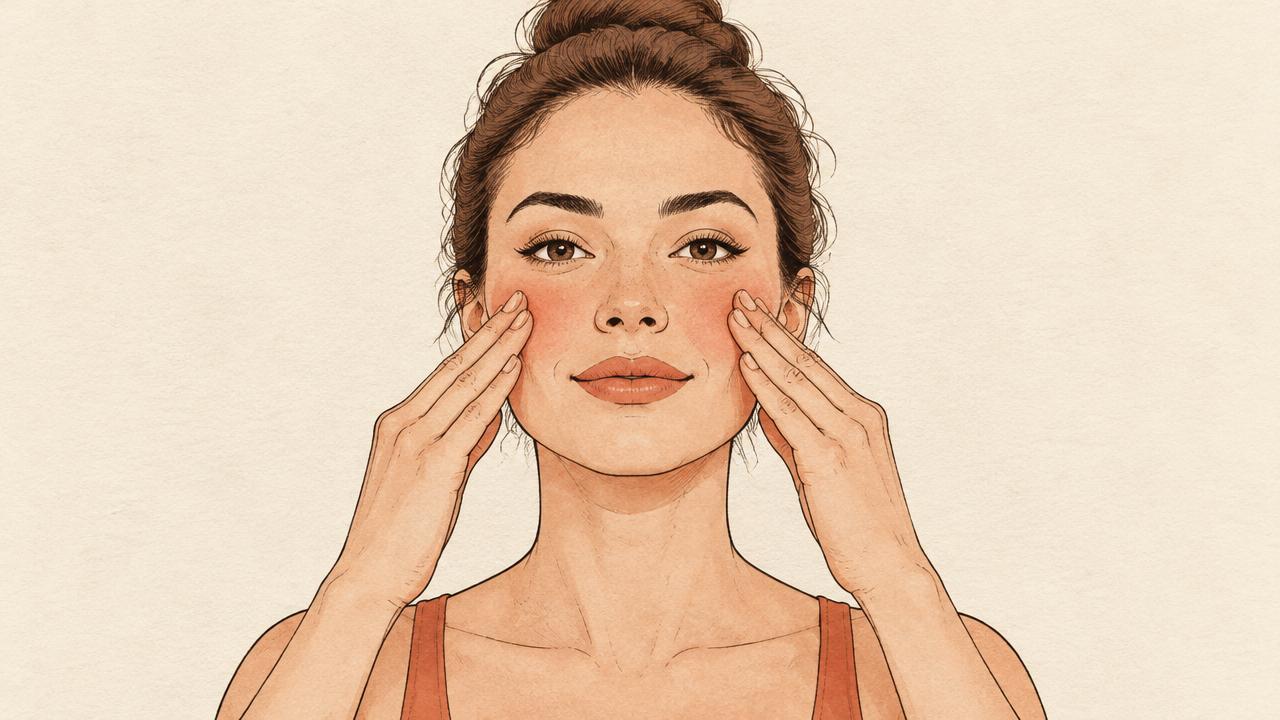
Unlike walking or strength training, facial exercises involve small muscles and provide little whole-body activity. They do not replace exercise for cardiovascular health or general fitness. Feeling a muscle work does not mean nearby fat is being burned.
A small uncontrolled study in JAMA Dermatology reported improvements in cheek-fullness ratings after a structured program. Only 16 of 27 enrolled women completed it, and there was no comparison group. It did not establish facial fat reduction or show that this beginner routine produces similar changes.
Any visible result is uncertain. Muscle movement, relaxation, facial expression, lighting, and posture can all affect how a face looks. Neither a stronger sensation nor more repetitions guarantees improvement.
Prepare for a comfortable session
Sit in a supported chair with your feet resting comfortably. Keep your head above your shoulders, breathe normally, and let your teeth remain slightly apart. Use a mirror only to check that movements stay small.
Ask your clinician before starting if you have recent facial or neck surgery, an injury, ongoing jaw pain, or a condition affecting facial movement. Skip movements that provoke painful clicking, locking, headache, or neck symptoms. Reducing clenching is consistent with conservative jaw-care advice.
Six gentle exercises to try
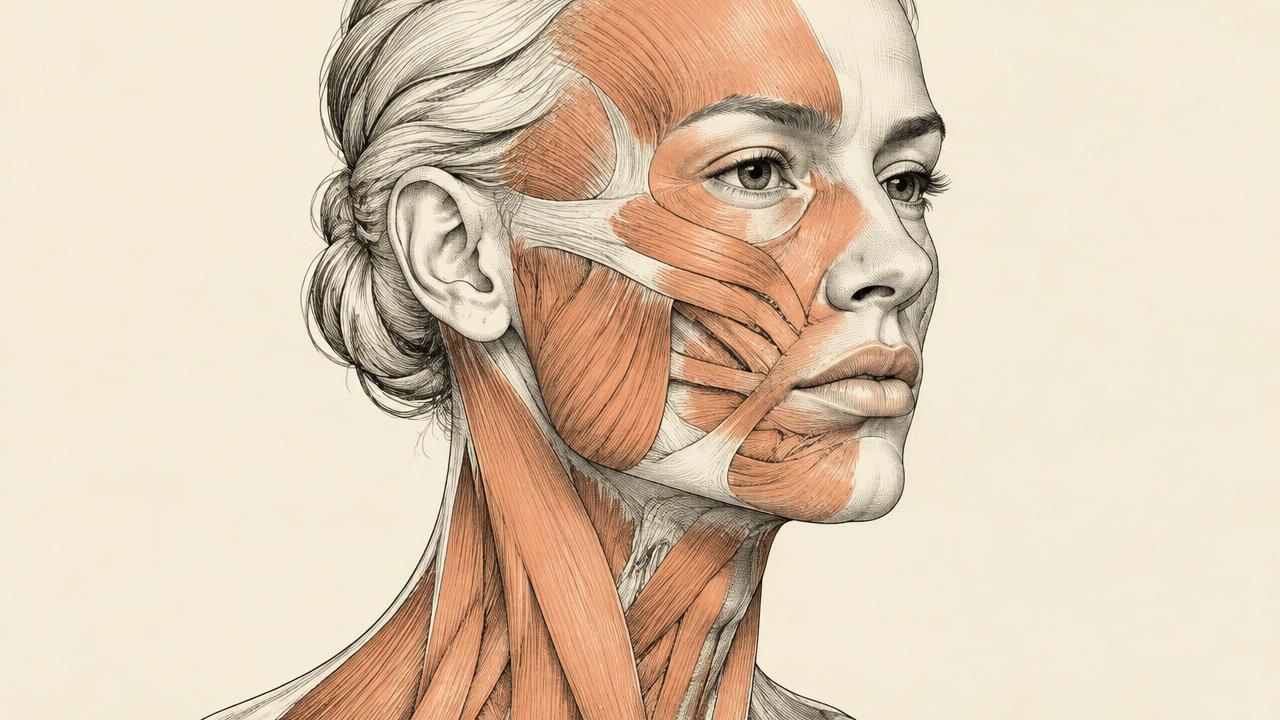
These conservative starting amounts are practical suggestions, not a clinically validated prescription. Rest between exercises and leave out any movement that does not feel comfortable.
Gentle cheek lifts
Purpose: practise controlled cheek movement. Start seated upright with lips resting and teeth apart. Slowly form a small closed-mouth smile, allowing the cheeks to rise without squinting. Hold for two seconds, then fully release for three seconds. Repeat five times, taking about 30–40 seconds including pauses. Avoid a maximum-width grin, tooth clenching, or pressing your fingers into the cheeks. Stop for jaw pain, facial discomfort, or twitching that feels unpleasant.
Controlled cheek puffing
Purpose: explore gentle lip and cheek coordination. Start upright with a relaxed jaw. Close your lips softly and take a small amount of air into both cheeks. Hold lightly for two seconds, then release through the lips and breathe normally. Repeat four times over about 30 seconds. Do not pack the cheeks tightly, hold your breath forcefully, or push air against resistance. Skip this movement if it causes pressure, ear discomfort, dental pain, or jaw symptoms.
Gentle lip movements
Purpose: move the lips without loading the jaw. Begin with your head neutral and mouth relaxed. Make a small rounded 'oo' shape, return to neutral, then form a soft 'ee' shape without a broad grin. Complete four slow cycles over 30–40 seconds. Keep the opening small and the teeth unclenched. Avoid exaggerated puckering, pulling at the mouth corners, or moving against your fingers. Stop for lip irritation, cramping, or jaw pain.
Small chin tucks
Purpose: practise comfortable head alignment, not remove a double chin. Sit tall and look straight ahead. Slide your head gently backward a small distance, as though making a subtle double chin, without looking down. Hold two seconds, return to neutral, and rest. Try four repetitions over 30–40 seconds. Do not force the head backward, tilt sharply, or brace your jaw. Stop immediately for dizziness, tingling, headache, or neck pain.
Facial relaxation
Purpose: notice and release unnecessary tension. Start seated with shoulders resting and teeth apart. Soften your forehead, let the eyebrows settle, loosen the lips, and allow the tongue to rest comfortably. Take four easy breaths, checking that you are not clenching. Spend 45–60 seconds here. Avoid forcing the mouth open or pressing on tender muscles. This is a relaxation exercise, not treatment for a jaw disorder; persistent discomfort needs professional advice.
Gentle neck stretches
Purpose: explore a comfortable range of neck movement. Start upright with shoulders level. Slowly tilt one ear a small distance toward the same-side shoulder while keeping your face forward. Pause for five comfortable seconds, return to center, and repeat on the other side. Try twice per side over about 45 seconds. Do not pull your head with a hand, roll the neck in large circles, or stretch into pain. Stop for dizziness, numbness, radiating pain, or headache.
Build a five-to-ten-minute session
Use one minute to settle your posture and breathing. Follow with roughly 40 seconds each of cheek lifts, cheek puffing, lip movements, and chin tucks. Add one minute of facial relaxation and about 45 seconds of neck movement. Short pauses bring the session to approximately six minutes.
If you prefer a longer break, extend the rests rather than doubling the effort. There is no need to fill ten minutes. Try a few sessions initially and judge comfort during the session and afterward before deciding whether to continue.
Avoid turning gentle practice into strain
Common mistakes include chasing a burning sensation, clenching during every repetition, and adding resistance devices. Soreness is not a useful target for this routine. If symptoms appear later that day, pause rather than assuming your muscles need harder training.
Do not repeatedly photograph or pinch your face to assess progress. A better check is whether the routine feels comfortable and remains enjoyable. No visible change is a reasonable outcome, and stopping is always an option.
The app's exercise library library lets you filter exercises, with a limited free selection. The daily routine page provides a daily exercise timer and completion feature. Use those tools for pacing, not as a reason to finish an uncomfortable movement.
Frequently asked questions
Should I do face yoga every day?
Daily practice is not necessary, and there is no established optimal schedule for cosmetic results. Begin occasionally, keep sessions short, and stop if symptoms occur.
Can these exercises make my face slimmer?
They are not a proven facial-fat-reduction method. The small pilot study assessed appearance and cheek fullness, not selective fat loss.
What if my jaw clicks?
Do not repeatedly test or push through a click. Avoid exercises that aggravate it, and seek dental or medical advice for painful clicking, locking, or difficulty opening.
The takeaway
Begin with gentle movement, comfortable breathing, and generous rest. Face yoga is optional self-care, not a requirement for a healthy face or a reliable route to facial slimming.
Sources and further reading
- JAMA Dermatology: Association of Facial Exercise With the Appearance of Aging
- NIDCR: Temporomandibular Disorders
General wellness information, not a diagnosis or individual medical advice. A healthcare professional can advise on unexplained swelling, pain, medical conditions, or recovery after treatment.