Facial Fat and Face Slimming
How to Get a More Defined Jawline
Understand what shapes your jawline and try gentle posture and relaxation movements, with clear safety limits and no promises of targeted fat loss.
6 min read · Educational guide
Jawline definition depends on bone structure, inherited proportions, facial fat, skin, muscles, and sometimes temporary swelling. Healthy body-composition changes may affect visibility, but exercises cannot reliably remove fat beneath the chin or reshape an adult jawbone. Gentle posture and relaxation movements are optional comfort practices, not a guaranteed route to a sharper jawline.
What Determines Jawline Definition?
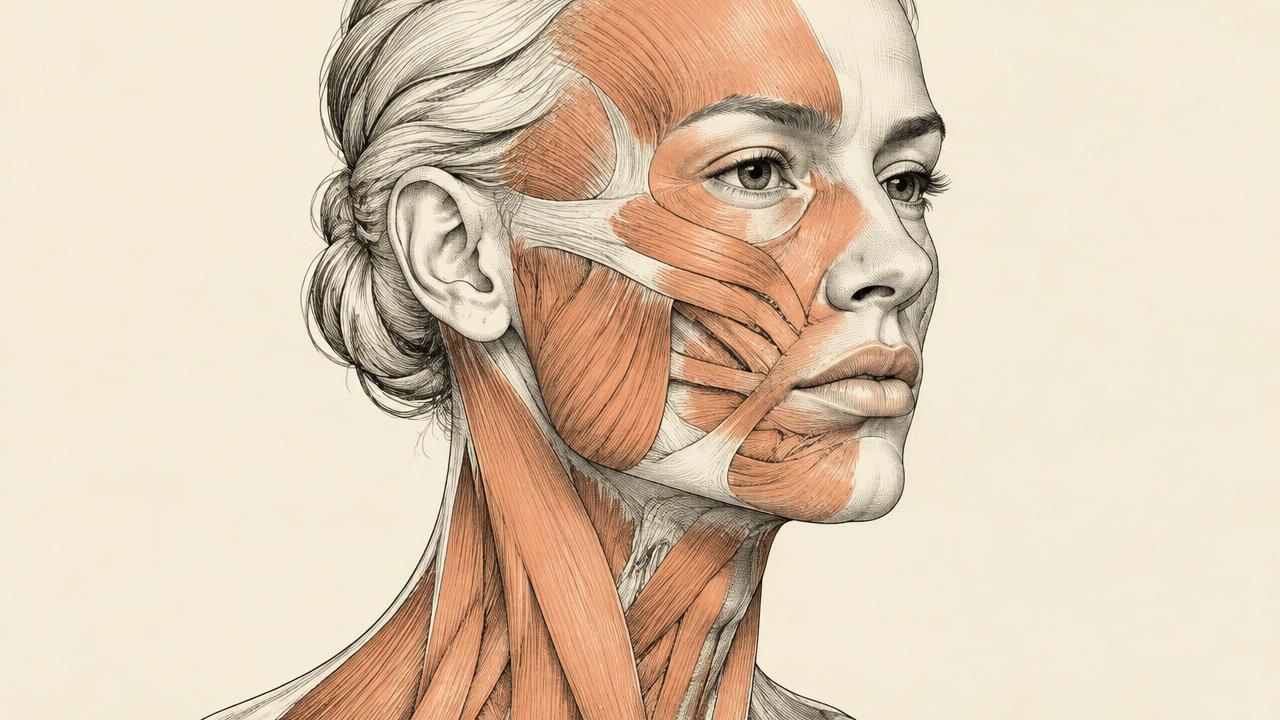
The lower jaw and chin provide the underlying framework. The tissues covering them determine how much of that framework is visible. A smaller or less projecting chin, inherited fullness under the chin, or age-related changes in skin support can all create a softer outline without indicating poor health.
Overall body fat can contribute, but facial distribution differs between people. Losing weight when medically appropriate might change the lower face; it cannot guarantee a particular angle. Further weight loss is not necessarily beneficial if your body weight is already appropriate.
Fluid-related puffiness can temporarily soften contours. A quick change in appearance is not evidence that the jawbone or facial fat changed. Camera position, neck position, and lighting can also make the same jawline look dramatically different.
What Exercises Can and Cannot Do
Local exercise is not a reliable method of targeted fat reduction. A small uncontrolled JAMA Dermatology study of facial exercise reported changes in cheek fullness and perceived aging among 16 completers. It did not establish jawline sharpening, fat loss, or changes in bone shape.
The routine below uses small, gentle movements to explore comfortable posture and relaxation. Its repetitions are conservative starting suggestions, not a validated cosmetic protocol or treatment for jaw disorders. You should finish without pain, strain, or a need to push further.
NIDCR advises reducing habits such as jaw clenching and excessive gum chewing when managing temporomandibular disorders. Resistance chewing devices and forceful clenching are therefore poor substitutes for a cautious approach.
A Beginner-Friendly Jawline Exercise Routine
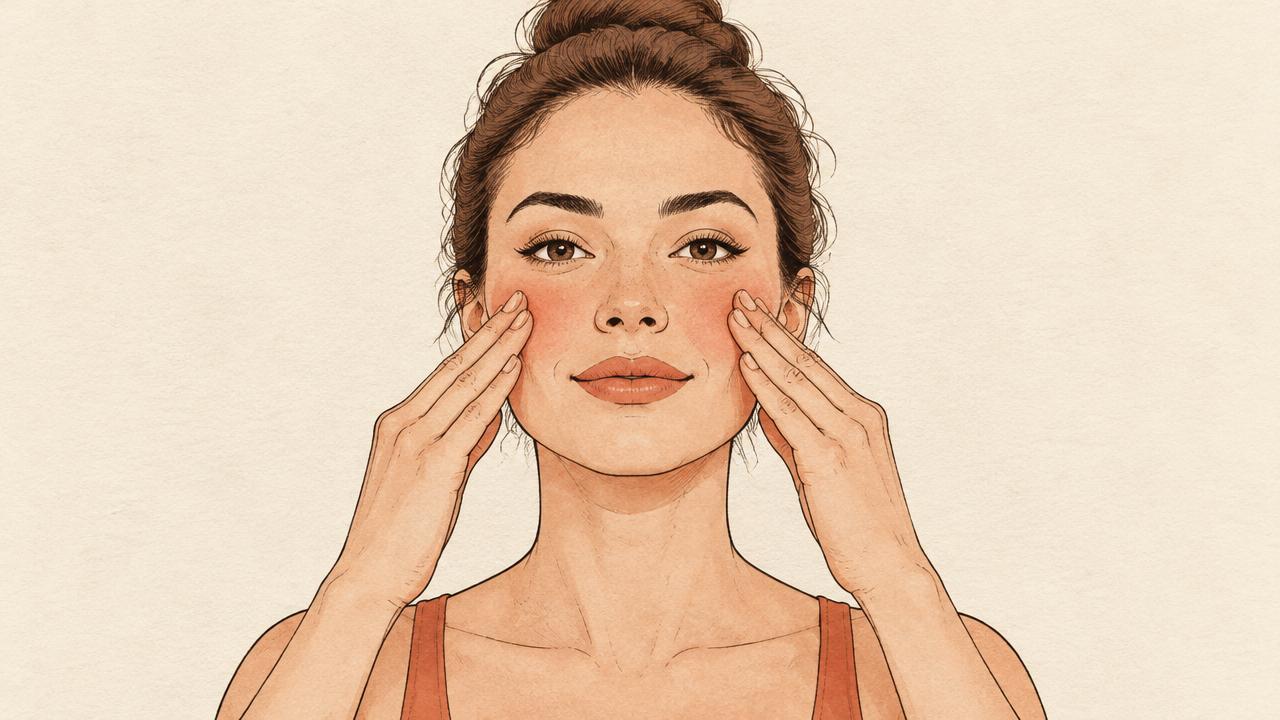
Sit in a supported chair with feet on the floor. Keep your breathing easy and your teeth unclenched. Try one round only at first, pausing between movements. Smaller motion is preferable to forcing a stretch.
If you have neck injury, recent surgery, dizziness with neck movement, jaw locking, or a diagnosed jaw disorder, ask an appropriate clinician whether these movements suit you. Do not use this general routine in place of prescribed rehabilitation.
Chin tucks: five small repetitions
Look straight ahead with your head level. Gently slide your head backward, as though making a small double chin, without looking down. Hold for two seconds, then release fully. Keep your shoulders still and jaw relaxed. Common mistakes include forcing the chin into the chest, pushing with a hand, and clenching. Stop for neck pain, headache, dizziness, tingling, or radiating symptoms.
Gentle side-neck stretch: twice per side
With your face pointing forward, slowly tip one ear slightly toward the same-side shoulder. Keep both shoulders relaxed. Hold a mild, comfortable stretch for five to ten seconds, return to center, and change sides. Do not pull your head with your hand, bounce, or rotate into a large neck circle. Stop for sharp pain, dizziness, numbness, or symptoms spreading into an arm.
Controlled jaw relaxation: five easy breaths
Let your lips rest comfortably and allow a small space between your upper and lower teeth. Breathe slowly without forcing the mouth open or pressing the tongue hard against the palate. Let the jaw settle rather than actively stretching it. Avoid exaggerated opening, side-to-side grinding, or repeated clicking. Stop if pain, catching, locking, or uncomfortable clicking develops.
Supported posture reset: five repetitions
Rest your back against the chair, lengthen gently through the crown of your head, and let the shoulder blades settle slightly back and down. Hold for three comfortable breaths, then relax. Keep the ribs easy rather than thrusting the chest forward. Avoid rigid military posture or squeezing the shoulders hard. Stop for shoulder or neck pain, breathlessness, dizziness, or tingling.
Know When to Stop or Seek Advice
Do not work through symptoms to complete a set. Skip any uncomfortable exercise, even if an app timer is still running. New pain, reduced opening, locking, or symptoms that persist afterward are reasons to stop and contact a dentist or clinician.
Painless clicking alone is common and does not always require treatment, but repeatedly provoking it is unnecessary. Clicking with pain or impaired movement needs assessment. Sudden painful facial swelling, fever, redness, or dental pain also warrants prompt care rather than more exercises.
Sudden lip, tongue, or throat swelling, or trouble breathing, is an emergency. Call your local emergency number immediately.
Support General Health Without Chasing Angles
Balanced meals, appropriate physical activity, regular sleep, and ordinary hydration support health regardless of jawline appearance. Avoid crash diets, dehydration, and excessive sodium restriction. If swelling persists, investigate the cause instead of assuming it is a cosmetic problem.
For desk work, try bringing the screen nearer eye level and changing position regularly. A useful goal is spending less time in an uncomfortable position, not holding an artificial pose all day. Posture can change how the neck looks in a photograph without removing fat.
The app's exercise library offers a filterable library with a limited free selection. Choose only comfortable movements and ignore any implication that completion proves cosmetic benefit. The library is not a diagnostic tool or individualized treatment plan.
Frequently asked questions
Can chin tucks remove a double chin?
Chin tucks have not been established as a way to remove under-chin fat. They involve gentle head positioning, not targeted fat burning. Under-chin fullness may reflect fat, skin, inherited anatomy, or other causes that an exercise cannot distinguish.
Should I clench my jaw to build definition?
No. Repeated clenching can aggravate jaw muscles and joints, particularly if you already grind your teeth or have pain. A relaxed jaw and comfortable movement are safer priorities than trying to create definition through force.
How often should I do this routine?
There is no proven cosmetic schedule. If comfortable and medically appropriate, you can occasionally try one gentle round and judge it by comfort, not appearance. Stop rather than increasing repetitions when symptoms appear, and follow individualized advice if you have a jaw or neck condition.
The takeaway
A defined jawline is partly an anatomical trait, not a measure of effort. Use gentle movement only within comfortable limits, avoid clenching and resistance devices, and seek assessment for pain or unexplained swelling.
Sources and further reading
- NIDCR: Temporomandibular disorders
- JAMA Dermatology: Association of facial exercise with the appearance of aging
- Human Movement: Systematic review and meta-analysis of spot reduction
- MedlinePlus: Facial swelling
General wellness information, not a diagnosis or individual medical advice. A healthcare professional can advise on unexplained swelling, pain, medical conditions, or recovery after treatment.