Facial Exercises and Massage
Do Face Exercises Actually Work?
Explore what research says about facial exercises, possible benefits, important limits, and how to try gentle movements without chasing slimming claims.
6 min read · Educational guide
Face exercises may help some people practise facial movement or enjoy a relaxation break, but evidence for lasting cosmetic benefits remains limited. They are not a proven way to reduce facial fat, guarantee a sharper jawline, or reshape facial bones. Whether they 'work' depends on the outcome you mean—and on distinguishing plausible effects from results that studies have actually demonstrated.
First, define what you want exercises to do
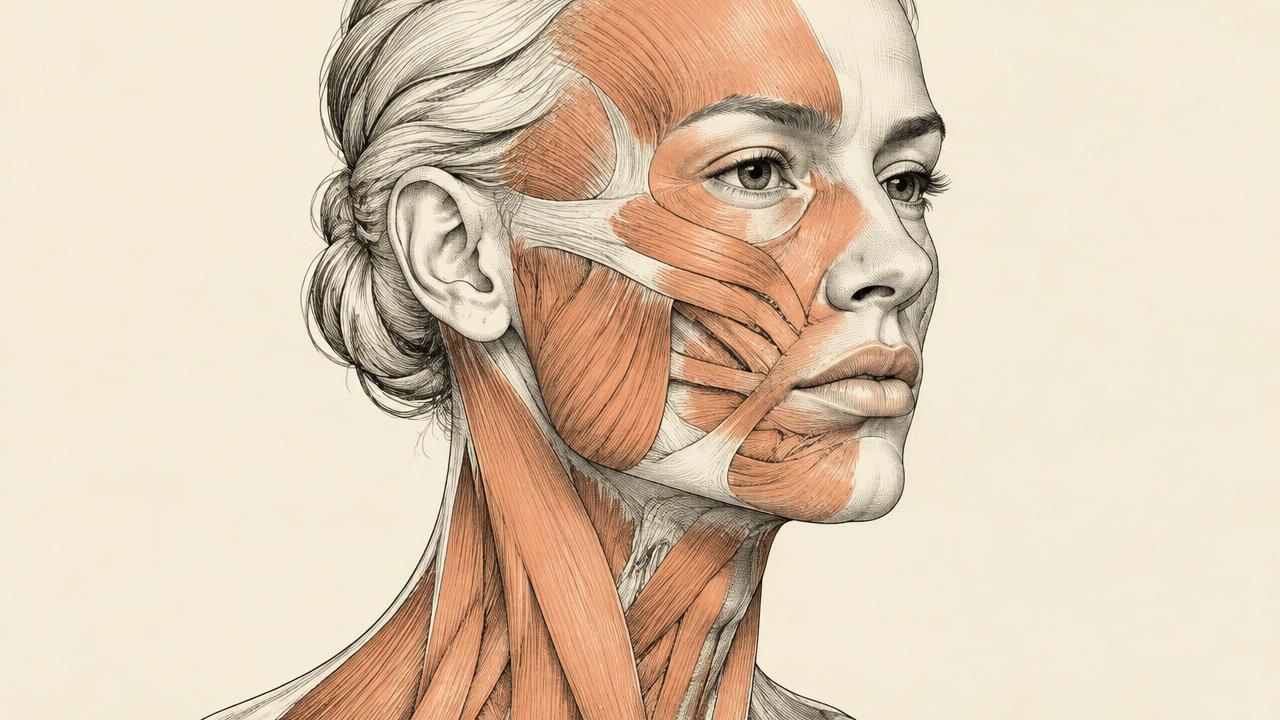
Facial exercise programs typically use repeated expressions, controlled lip movements, cheek contractions, and sometimes posture exercises. Their proposed purpose is to train muscles involved in expression. Some programs also include relaxation, which is different from strengthening.
A comfortable movement break and measurable facial slimming are separate outcomes. You might enjoy one without seeing the other. Descriptions such as 'toning' are often vague: they may refer to muscle activity, a temporary expression change, or a claimed cosmetic transformation.
Facial appearance also depends on bone structure, skin, connective tissue, fat distribution, age, and fluid shifts. A photograph cannot isolate which tissue changed. This matters when evaluating dramatic before-and-after images.
What the frequently cited study actually found
A 2018 JAMA Dermatology pilot followed middle-aged women through a 20-week facial exercise program. Participants learned a substantial routine, practised for 30 minutes daily initially, and later practised on alternate days. Ratings suggested improvement in upper- and lower-cheek fullness among those who completed the program.
However, only 16 of the 27 enrolled women completed the study. That attrition matters: people who continue may differ from those who stop. The study also lacked a non-exercising control group, so it could not reliably separate the program's effect from other influences.
The participants were women aged 40–65, limiting generalization to men, younger adults, and other groups. The study did not demonstrate facial fat reduction, bone reshaping, or a universally more defined jawline.
Importantly, fuller cheeks are not the same outcome as a slimmer face. The study also does not establish that a five-minute beginner session reproduces results from a much longer program. It is a reason for further research, not a guarantee.
What Face Exercises May Help With and What They Cannot Do
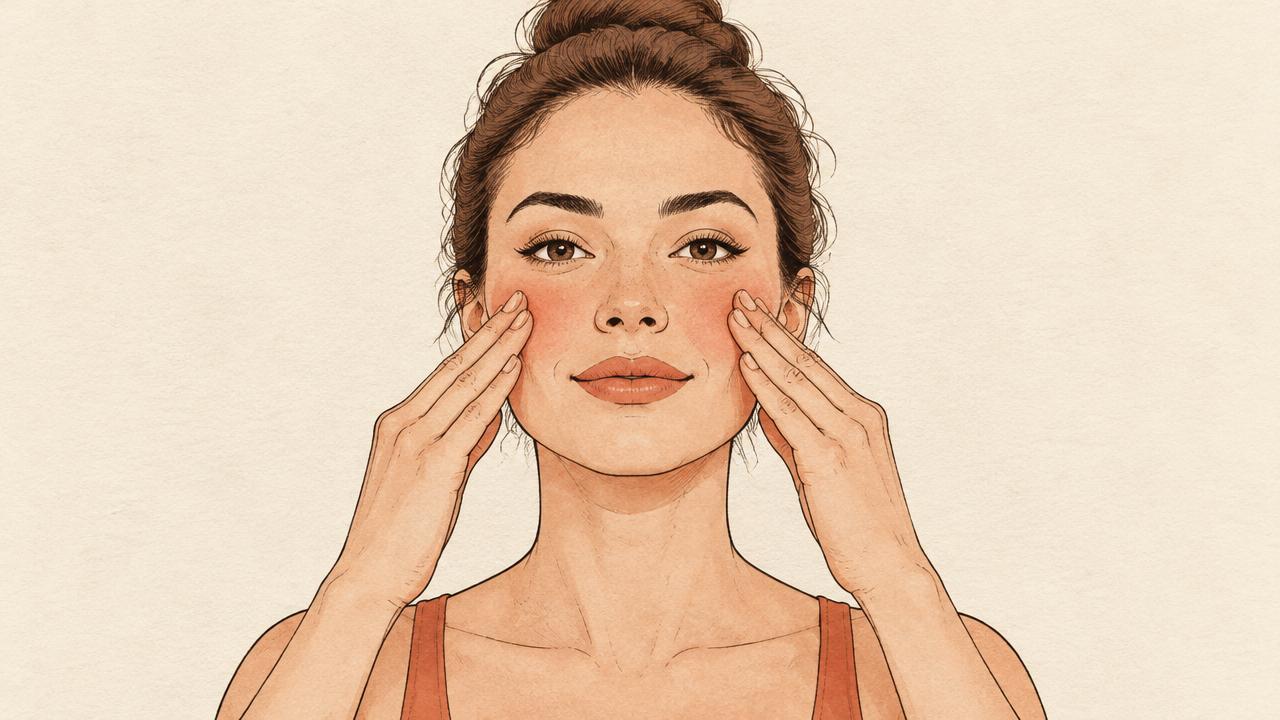
The distinctions below reflect the pilot study's limited cosmetic findings and the need to avoid aggravating jaw symptoms. Possible benefits should not be mistaken for established outcomes for every user.
| Goal | What may be reasonable | What is not established |
|---|---|---|
| Movement awareness | Practising small, deliberate facial movements | A guaranteed functional improvement in healthy adults |
| Relaxation | Noticing clenching and taking a comfortable pause | Treatment of jaw pain or a jaw disorder |
| Cheek appearance | Limited pilot evidence of increased fullness ratings | A predictable effect across ages, sexes, and routines |
| Facial fat loss | No established selective fat-loss benefit | Burning cheek fat by repeatedly moving the cheeks |
| Jawline definition | Posture or expression may change an immediate impression | A permanently sharper jawline for everyone |
| Bone structure | Normal movement occurs around existing anatomy | Reshaping adult facial bones with cosmetic exercises |
| Wrinkles or skin laxity | Research questions remain | Reliable reversal or prevention through face exercises |
Why muscle conditioning is not spot reduction
Muscle and fat are different tissues. Contracting a muscle does not establish that the fat beside it will shrink. A sensation of effort in the cheeks or jaw therefore cannot tell you whether fat is changing.
Even if a program eventually proves capable of increasing some facial muscle volume, that would not automatically produce a narrower face. Added fullness might be the desired outcome for one person and the opposite of another person's goal.
Neck posture can also change the angle between the chin and neck in a photograph without changing facial fat. This is one reason to distrust comparisons with different head positions, camera distances, lighting, or expressions.
Read claims with a few practical questions
Ask whether a claim describes a controlled study, a personal testimonial, or an advertisement. Check what researchers measured: perceived age, cheek fullness, fat volume, and personal satisfaction are not interchangeable.
Look for the number who started and finished, not just the most successful examples. Ask whether results persisted after practice stopped and whether adverse effects were recorded. A small positive study cannot answer every question.
Be especially cautious with guaranteed deadlines, 'fat-burning' exercise labels, and claims of permanent anatomical remodeling. A commercial routine may be convenient without having evidence for the outcome used to sell it.
How to try gentle exercises anyway
If you enjoy the idea, choose a brief routine with small cheek lifts, relaxed lip movements, and pauses. Sit comfortably, keep your teeth apart, and avoid forceful resistance or prolonged clenching. Start with fewer repetitions than you think you need.
Stop for pain, locking, worsening clicking, headache, dizziness, or neck symptoms. People with ongoing jaw problems should ask a dentist or clinician which movements are appropriate. NIDCR recommends reducing habits such as clenching and notes that conservative approaches are generally preferred for TMD.
Use the app's filterable exercise library library to explore its limited free selection, or daily routine for a daily timer and completion record. Completion measures participation, not proven facial change. You can shorten a session, skip an exercise, or stop entirely.
After several sessions, evaluate comfort and enjoyment rather than searching for tiny visual differences. If practice increases appearance anxiety or leads to constant checking, stepping back is a sensible choice.
Frequently asked questions
How long before I see results?
There is no reliable timeline. The pilot lasted 20 weeks, but its findings do not mean everyone will improve by that point or that shorter routines will produce comparable results.
Does a burning feeling mean an exercise is effective?
No. Burning, fatigue, and soreness do not prove fat loss or cosmetic benefit. Keep movements easy and stop rather than chasing discomfort.
Are face exercises the same as facial rehabilitation?
No. Rehabilitation for a diagnosed condition is individualized professional care. A general cosmetic routine should not replace assessment or prescribed exercises.
Can I use exercises instead of general physical activity?
No. Facial exercises do not provide the cardiovascular or whole-body benefits of regular movement. Treat them, if you choose, as a small optional addition.
The takeaway
The most defensible answer is limited and goal-specific: facial exercises may be enjoyable, and preliminary appearance findings deserve study, but facial slimming is not established. Choose comfort over intensity and evidence over promises.
Sources and further reading
- JAMA Dermatology: Association of Facial Exercise With the Appearance of Aging
- NIDCR: Temporomandibular Disorders
General wellness information, not a diagnosis or individual medical advice. A healthcare professional can advise on unexplained swelling, pain, medical conditions, or recovery after treatment.